Why Compliance Teams Need Transformation Now More Than Ever
November 18, 2025 - Selfcomplai
Executive Summary
Compliance teams need digital transformation more than ever to navigate an increasingly complex and dynamic regulatory landscape. The escalating volume and intricacy of global regulations, coupled with the rise of sophisticated digital risks like cybersecurity threats and data privacy breaches, have rendered traditional, manual compliance processes dangerously inadequate.
Digital transformation provides the essential tools to automate repetitive tasks, enhance accuracy, enable real-time monitoring, and shift the compliance function from a reactive, cost-centric role to a proactive, strategic partner that protects and creates value for the organization.
Compliance complexity increase in 3 years
C-suite leaders see compliance as value contributor
Productivity improvement with compliance tech
85% Complexity Increase
Compliance requirements have become significantly more complex over the past three years across all industries.
50% Productivity Gain
Financial services companies report increased productivity and cost savings through compliance technology investment.
The Urgent Need for Digital Transformation in Compliance
In an era defined by rapid technological advancement and an increasingly complex global regulatory environment, the traditional, manual-centric approach to compliance is no longer tenable. Organizations across all industries are recognizing that digital transformation is not merely an option but a strategic imperative for their compliance functions.
Key Drivers Propelling Compliance into the Digital Age
The Escalating Complexity of the Regulatory Landscape
The regulatory environment has become a primary catalyst for digital transformation within compliance functions. According to PwC's Global Compliance Survey 2025, a staggering 85% of respondents reported that compliance requirements have become more complex over the past three years.
Industry Breakdown of Regulatory Complexity Impact
- Financial Services: 90% report increased complexity
- Industrials & Services: 86% affected
- Consumer Markets: 83% experiencing growth challenges
- Health Industries: 84% impacted
- Technology, Media & Telecom: 81% affected
Source: PwC Global Compliance Survey 2025
This complexity is further amplified for the 50% of respondents who operate globally and must navigate a patchwork of different laws and regulations across multiple jurisdictions. The sheer volume and dynamism of these rules make manual compliance processes untenable, forcing organizations to seek digital solutions.
The Rise of Digital Risks: Cybersecurity and Data Privacy
The proliferation of digital technologies has introduced a new class of risks that compliance teams must manage, with cybersecurity and data privacy at the forefront. As organizations digitize their operations, they handle vast amounts of sensitive data, making them prime targets for cyberattacks.
AI Implementation Concerns
of respondents are concerned about data privacy and security risks when deploying AI for compliance activities.
The challenge is not just about protecting data but also about ensuring compliance with a myriad of privacy regulations that demand transparency, consent, and the right to data erasure. This has made data privacy and security a top priority for compliance teams, with 51% of respondents identifying these areas as their main focus.
Core Benefits of Digital Transformation for Compliance Teams
Enhanced Efficiency
Automation of manual, repetitive tasks through RPA, AI, and machine learning, freeing up valuable time for strategic activities.
Improved Accuracy
Significant reduction in human error through automated data validation and standardized processes.
Real-Time Monitoring
Proactive risk management through continuous monitoring and real-time insights.
Data-Driven Decisions
Predictive analytics and advanced data analysis for strategic decision-making.
Productivity Impact
50% of financial services companies that have invested in compliance technology have seen increased productivity, efficiencies, and cost savings, compared to an average of 43% across all sectors.
Overcoming Core Challenges with Digital Solutions
Compliance teams today face a multitude of challenges that can impede their effectiveness and expose their organizations to significant risks. These challenges are often interconnected, stemming from the limitations of traditional, manual-based approaches to compliance in an increasingly complex and dynamic business environment.
The Burden of Manual and Error-Prone Processes
One of the most significant challenges facing compliance teams is the heavy reliance on manual and error-prone processes. Many compliance activities, such as data entry, document review, and report generation, are still performed manually in many organizations, which is not only inefficient but also highly susceptible to human error.
Key Challenges of Manual Processes
High Risk of Human Error
Manual data handling is inherently vulnerable to typos, incorrect entries, and misfiled documents, which can have cascading effects leading to inaccurate reporting and non-compliance.
Inefficiencies and Increased Costs
Manual processes are time-consuming and resource-intensive, leading to increased operational costs and reduced capacity for strategic activities.
Lack of Scalability
Manual processes and outdated systems cannot handle the exponential growth in compliance data volumes as organizations expand.
The Struggle with Outdated Legacy Systems
Outdated legacy systems represent one of the most significant and persistent challenges for compliance teams, acting as a major barrier to effective and efficient regulatory management. These systems, often built on decades-old technology, are ill-equipped to handle the demands of the modern regulatory landscape.
Regulatory Pace
Inability to keep up with evolving regulations
Integration Issues
Data silos prevent unified compliance view
Security Vulnerabilities
Outdated security measures expose organizations to risk
Case Example: Major European Bank
A major European bank faced significant delays and errors in credit decisioning when attempting to integrate its legacy lending platform with a new mobile application, ultimately leading to customer complaints and reputational damage. This highlights the real-world impact of legacy system limitations.
Real-World Success Stories: Digital Transformation Across Industries
The theoretical benefits of digital transformation in compliance are powerfully demonstrated through real-world case studies across a variety of industries. These success stories illustrate how leading organizations have leveraged technology to overcome common compliance challenges and achieve significant operational improvements.
Financial Services: Automating Critical Compliance Functions
The financial services industry has been at the forefront of adopting digital transformation to address its complex and demanding compliance requirements. Faced with stringent regulations and the constant threat of financial crime, banks and other financial institutions are increasingly turning to RegTech solutions.
Deutsche Bank: Streamlining KYC and AML with Intelligent Automation

Global Financial Services Giant
$708 billion in assets, 58 countries
Deutsche Bank faced significant operational challenges in its compliance processes, particularly in KYC and AML. Employees were spending an average of over 40 hours per account on manual screening and investigation tasks, resulting in a high number of false-positive alerts.
WorkFusion Solution Implementation
- • AI-powered contextual analysis to reduce false positives
- • Document Intelligence for automated processing of unstructured documents
- • Integration with existing banking systems
Key Metrics
Impact
The transformation freed up thousands of employee hours annually, allowing analysts to focus on genuine risks rather than manual processing.
Source: WorkFusion Case Study
DBX Bank: Reducing Errors and Accelerating Risk Assessments with RPA

Mid-sized U.S. Financial Institution
150 branches, 5+ million customers
DBX Bank was struggling with an outdated legacy system that was costly to maintain and inefficient. The bank's manual compliance and risk management processes were labor-intensive and prone to errors, posing a significant challenge in the face of growing competition from fintech companies.
Reduction in Compliance Errors
Faster Risk Assessment
Operational Cost Reduction
Healthcare: Ensuring Data Privacy and Regulatory Adherence
The healthcare industry is undergoing a profound digital transformation, driven by the dual imperatives of improving patient care and ensuring the privacy and security of sensitive health information. Compliance teams in this sector face the critical challenge of navigating complex regulations, most notably HIPAA.
The healthcare industry is undergoing a profound digital transformation, driven by the dual imperatives of improving patient care and ensuring the privacy and security of sensitive health information. Compliance teams in this sector face the critical challenge of navigating complex regulations, most notably HIPAA.
Mount Sinai Health System: Achieving HIPAA Compliance with AI-Powered Tools
Prominent Healthcare Provider
New York-based Health System
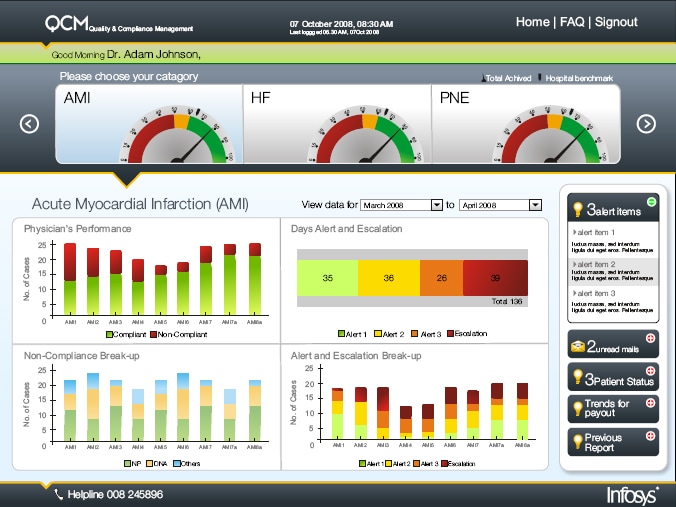
The Mount Sinai Health System successfully harnessed artificial intelligence to enhance its compliance with HIPAA. Faced with the immense challenge of protecting vast amounts of sensitive patient data, Mount Sinai implemented an AI-driven compliance solution to automate and strengthen its data security practices.
AI-Powered Compliance Features
- Continuous monitoring of digital environment
- Machine learning algorithms for real-time violation detection
- Automated flagging of unauthorized access and data breaches
- Predictive analytics for proactive risk mitigation
Key Benefits
- Proactive compliance stance vs. reactive
- Improved patient data protection
- Streamlined compliance reporting
- Enhanced audit processes
Technology Impact
The AI-powered system enables real-time detection of potential HIPAA violations, allowing the compliance team to address issues immediately rather than discovering them during periodic audits.
Broader Healthcare Applications
Beyond data privacy, healthcare and pharmaceutical companies are increasingly using AI for predictive analytics and fraud detection. AI algorithms analyze vast datasets of insurance claims and medical records to identify patterns indicative of fraudulent activities.
Pharmaceutical companies are using AI to monitor supply chains for counterfeit drugs or unethical sourcing practices, transforming compliance from a reactive to a proactive stance.
The Path Forward
The evidence is clear: digital transformation is no longer optional for compliance teams. The convergence of escalating regulatory complexity, emerging digital risks, expanding compliance scope, and heightened stakeholder demands has created an environment where traditional, manual approaches are simply unsustainable.
Key Takeaways
For Organizations
- Compliance complexity increased 85% in 3 years
- 77% of C-suite leaders recognize compliance as strategic value
- Digital transformation enables proactive risk management
- Automation reduces errors and operational costs
For Compliance Teams
- Move from reactive to proactive stance
- Leverage AI for real-time monitoring
- Build strategic partnerships across the business
- Focus on value creation, not just protection
The success stories across industries—from Deutsche Bank's KYC automation to Mount Sinai's HIPAA compliance—demonstrate that digital transformation delivers tangible results. These organizations are not just surviving in the new regulatory landscape; they are thriving, using compliance as a competitive advantage.
The Time for Transformation is Now
Organizations that embrace digital transformation in compliance today will be better positioned to navigate tomorrow's regulatory challenges, protect their stakeholders, and create sustainable value in an increasingly complex business environment.